Monday, January 22, 2007

Live on SharePoint 2007! Recap and Leasons Learned....

Well, our portal was officially switched over last Tuesday, January 16th, 2007. We spent last week doing office-by-office roadshows, giving demos to both staff and lawyers. Because of how we designed the site, it was important to break out the training sessions and we used 'volunteers' from the audience to log in with their account so people could see first hand how the system would look to them.

The feedback has been overwhelming. Our targeting of webparts, quick access to financial data and WorkSite document search features are scoring big points with our users. Since going live, we are AVERAGING over 1,000 document searches per day. We wouldn't be maintaining that level of use unless it worked :) Stuff that we had in our old portal is now looked at as 'new' features because they're actually easy to find!

Since going live, we have learned a few things. First, those of you on previous versions of SharePoint should proceed with caution if you're converting over webparts that worked in '03, looking to buy webparts from vendors converting their webparts from '03, or any freeware webparts. We were running webparts from '03 for MONTHS on our SharePoint 2007 environment with any issues and only found problems as the load begin to reach critical mass. So, don't be fooled into thinking that just because you didn't get an error right from the start that your webparts are safe.

  • Make sure to properly “dispose” of SharePoint objects when programmatically accessing the API to avoid excessive memory consumption and performance/stability problems.(see http://msdn2.microsoft.com/en-us/library/ms778813.aspx)
  • Make liberal use of caching in memory, particularly of objects resulting from CPU or memory intensive processes, such as XSL transformations or disk access, but must also be mindful of caching or session state across processes (in a “web garden”) or across servers (in “web server farm”).(see http://support.microsoft.com/kb/313997/)
  • Load test and look for memory leaks or process hogs *before* going live to identity potential problem areas. For example, a bug in the .NET Framework was causing a memory leak in XSL transformations that used inline script, which in turn was crashing the IIS worker processes and stopping the server. After a simple rewrite of these XSL transformations, memory usage returned to normal and stabilized the server.(see http://support.microsoft.com/kb/316775/EN-US/)
The feedback from our users has been awesome and the folks from XMLAW were instrumental in our success. I hope that all of you doing SharePoint 2007 deployments are as fortunate/lucky as we've been :)

Friday, January 05, 2007

See the Sheppard Mullin SharePoint 2007 portal live!

On January 18th, ILTA will be sponsoring a webinar in which we will be demonstrating our SharePoint 2007 portal, featuring XMLAW. Non-ILTA members are also welcome to join, the connection fee is very reasonable.

To listen to the recording of this webinar, click here. You should just have to enter your name and then click View Recording (the key isn't required).

Tuesday, December 19, 2006

Enterprise Search at Mofo - AnswerBase

Thanks to the generous contribution of Oz Benamram, we've been given some insight into their amazing tool at Mofo, AnswerBase. Built on the Recommind search engine, AnswerBase is the most comprehensive search tool built by a law firm (at least as far as I'm concerned). It aims to make it easy to find and drill down on anything relevant to a user's search term. It goes beyond searching the full-text of documents, finding related documents by industry, experts on the particular legal topics involved, etc. Click here to download the viewlet which gives a nice overview of the tool.

I'm shooting for "Oz-light" with our SharePoint enterprise search initiative, wish us luck!

Thursday, December 14, 2006

SharePoint 2007 Enterprise Search: Screenshots

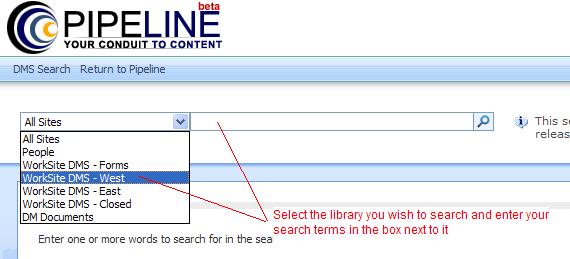
We're very close to launching our new portal, but to give our users a sense of what it will look like and to test performance, we launched a separate 'search site' on Tuesday. This site doesn't have any of the core portal navigation, it's a simple search page for searching our collection of documents in WorkSite (using xmlaw's stuff for indexing WorkSite). There were over 1,100 searches run during the first two days and the built-in reporting for tracking and monitoring searches is actually not bad.


I was asked to show some screenshots of our 'search site'. As you'll notice, there isn't a left navigation menu and the Practice, Department, Office and Team horizontal navigation links that are available on our main portal don't show up either. The drop down list is pretty straight forward to select what criteria you want to search.


Here you'll see the search results page (I had to redact out a few things). Notice that over 1 million documents came back in the result set, in UNDER 1 SECOND. Using the xmlaw toolkit, we're able to index and display profile data from our DMS and the search term used is shown in the document abstract. So far, we are getting amazing feedback from the lawyers and staff:


  • "WOW! JUST DID A COUPLE OF SEARCHES - VERY, VERY IMPRESSIVE"
  • "It is like having our own personal Google! Worked great, document opened directly from the link."
  • "Wow - that's FAST. I just put in "bulletin" and got 8,448 hits in .33 seconds...I couldn't believe it!"
  • "it's really quite an improvement."
  • "Wow. This is amazing! I just ran a search for a very common name here in the office and got 6,656 results in 0.31 seconds!"
  • "After a couple of quick sample entries, all I can say is -- HUGE improvement! I typed in a word or short phrase and actually got a series of pertinent topics -- fast!"
  • "Search on Steroids - Magnificent!"

Lawyers constantly complain about the built-in search within DM systems. This is a quick win and something worth looking into if you want to ease your way into using SharePoint. I can foresee the MOSS enterprise search giving Recommind a run for its money.

Tuesday, November 14, 2006

SharePoint 2007 Update - Enterprise Search Rocks!!

So, we are now less than a month away from going live on our SharePoint 2007 portal. Practice, Office, Admin Department, Client, Matter and personalized home pages are almost finished. We are using audiences and content targeting to deliver webparts and data on everyone's home page. We have ported over the CMS.Net reporting, so we have a decent amount of financial reports available and our firm directory is coming along nicely. Our content administrators are getting trained to start publishing content to their respective pages (we have content admins for virtually every page on the site) and our beta group is gearing up for testing within a week or two.

You've likely seen my previous posts on Windows Workflow Foundation (WWF), which has been a huge boon for us, now let me introduce you to the next new feature of SharePoint 2007 which I think is reason enough to make the switch, the new Enterprise Search engine.

Previously, the enterprise search in SharePoint had some limitations as far as how much data it would handle (scalability) and how well it actually found the stuff you searched for (relevance). Microsoft addressed this issue in spades with the 2007 release, so much so, that they are actually breaking out search as its own SKU in the event an organization hasn't already licensed SharePoint and would like to buy it separately.

With the help of XMLAW's web part for Enterprise Search within WorkSite, we pointed the SharePoint 2007 Enterprise Search engine at our DMS and let it rip. With almost 3 million documents firmwide, it didn't happen overnight, but soon we had access to all our documents via the search engine. Most search results come back in under 1 second, with more complex searches taking less than 3 seconds. We can also search WorkSite profile data, the search terms are highlighted in the search results and relevancy has been fantastic. Initial testing by our lawyers has produced rave reviews and we're actually rolling out a 'search site' with access to just the DMS prior to our firmwide portal release. This will help introduce the portal in an easy way and begin providing the lawyers a feature they have been longing for, fast searching on the DM.

The Enterprise Search engine with SharePoint 2007 can do lot's more than just search documents in your DMS. Using the BDC (Business Data Catalog), we're able to point this search engine at any database we want to. So, for example, if a lawyer wants to know how much time has been entered by x lawyers, to y client over z time frame, we can give them interface into this via SharePoint. While not as feature rich out of the box as something like Recommind or Autonomy, it can likely do 70%-80% of what those systems can offer at a fraction of the cost. So, for those of you looking to make an investment in an enterprise search tool in 2007, you should really take a long look at SharePoint Enterprise Search before moving on to other high priced options in the marketplace.

Wednesday, October 11, 2006

Live from the Chicago Ark Group KM Conference

Among other sessions, I will quickly blog about a panel currently going on, being moderated by Ron Friedmann with partners from Goldberg Kohn, Kelley Drye and Burns & Levinson. While the last two days have been focused on presentations by KM folks, this an interesting panel bringing to light the opinions of lawyers about KM topics and if it's really as relevent as WE think it is..

Does KM matter seems to be the overarching question. The lawyers agree that there is important in concept, but there isn't any agreement upon what it really means to them, which shouldn't be a shock.

How to coax lawyers to contribute or adhere to KM systems/policies was discussed with approaches that might work in small groups, don't might not scale well across the entire firm.

There's some debate about the value of finding documents fast, one partner noted, "our clients don't pay us to find documents more quickly" in response an audience member said "but they won't pay you to retrieve and produce documents more slowly" touche!

Tuesday, October 03, 2006

Lexis Nexis Announces atVantage, while Thomson Acquires LiveNote

I was recently invited to an 'Advisory Council' meeting by Lexis to discuss their future plans with InterAction and how to better leverage content within it. This meeting was on the heels of their announcement regarding atVantage, a new iteration of Market Intelligence.

Lexis has begun to realize the power of pushing content into InterAction and atVantage is the first attempt to do just that. They briefly showed us some screen shots of the new system and spent a lot of time getting feedback from the group as to the direction they should take with the product. I was encouraged that it truly wasn't a sales pitch, they really wanted to hear how they could better meet the needs of large law firms. The main take away from the session was that there is a lot of data that lawyers need to see related to a contact. Some data is generated by the firm and some sits externally, Lexis needs to figure out how to aggregate the data and present it in an easily consumable format for the lawyers. It may take a while, but it appears that Lexis is on its way towards a better, more information rich InterAction product.

Meanwhile....

Thomson announced last week that they have acquired LiveNote. I truly marvel at the Big 2's appetite for buying companies and then figuring out how to make it work in their product structure. Given that Lexis has the Applied Discovery offering, it shouldn't be long before Thomson/West look to also acquire a company that provide an online review tool for e-discovery.

Monday, August 14, 2006

Applied Discovery Fires Back at Law.com EDD Article

Last Friday, I received an e-mail from Miranda Glass at Applied Discovery, attempting to present their side of the story published in the August 10, 2006 online issue of Law.com titled, "Software Glitch May Have Erased E-Mail Text in Enron Suits.", which was also quickly found and distributed by Monica Bay.

Here's the e-mail:

On Friday, August 10th, Law.com published an article that, without some clarification, we believe has the potential to unnecessarily scare anyone who works on electronic discovery matters, regardless of whether using in-house solutions or any outside service provider. In case you were one of those who may have been alarmed by the article, we wanted to share with you the Letter to the Editor Applied Discovery submitted to Law.com in response.

August 11, 2006

Dear Editor: We would like to address a number of factual errors contained in an article published in the August 10, 2006 online issue of Law.com titled, "Software Glitch May Have Erased E-Mail Text in Enron Suits."

This story alleges that "a software bug may have erased text in emails produced for electronic document production being handled by Applied Discovery in the Enron civil suit." In fact, the Microsoft Outlook 2003 bug in question does not erase anything. The bug causes Outlook 2000 emails to appear blank on computers without a patch that Microsoft issued as part of its Office 2003 Service Pack 2 in September 2005. This bug affected what appears to be less than one-tenth of one percent of email documents.

To set the record straight:

  1. No data was lost as a result of this bug. It did not erase anything but simply caused the text of emails to not be displayed. The data is present and can be viewed by applying Microsoft's patch to address the error.
  2. In the Outlook 2000 emails affected by this bug, the To, From, Subject fields and attachments are 100 percent viewable.
  3. Less than .01 percent of the email documents involved were affected and 99.99 percent of all email materials were correctly identified and fully disclosed in the discovery process. No other materials appear to be affected by this bug.
  4. Applied Discovery does not use Microsoft Outlook to search email. Rather, Outlook is used to help display emails.

Applied Discovery has been working closely with Microsoft throughout this situation to address the needs and concerns of our clients and maintain the sanctity of our e-Discovery process. Microsoft has expressed confidence that this Outlook issue has been fully resolved. We encourage clients with lingering questions to contact us.

Friday, August 11, 2006

4th Socha Gelbman EDD Report Published

Law Technology News recently published a brief synopsis of the annually anticipated EDD survey findings from George Socha & Thomas Gelbman.

Many of the industry's household names were consistently ranked in the top 5 of various categories, along with some new players. I found it interesting that the market will continue to enjoy double digit growth, but they do forecast a slight decline in growth in the coming years. It was also interesting to note that "do-it-yourself" firms and legal departments accounted for over 90 million.

The survey, and results, in its entirety can be purchases for $5,000. Go here for more details.

Monday, July 17, 2006

More merger talk as Hummingbird mulls Open-Text bid...

I read this article today on Law.com and was a bit surprised that the Symphony bid didn't go through already. For a change of pace, at least it's not West or Lexis trying to acquire Hummingbird :)

Wednesday, July 05, 2006

LexisNexis acquires Dataflight including its flagship solution, Concordance

I just received word from our Lexis rep today that they are acquiring Dataflight, the makers of Concordance. This is the latest, in a string, of acquisitions by Lexis to provide total practice management solutions to the legal community. I'm still not convinced that the legal market is better or worse off by the acquisitions of Lexis and West. Take for example InterAction, which was purchased by Lexis. They've had the product now for over a year and still haven't gotten their 'content enabled' CRM system, which purports to integrate InterAction with content from the Lexis 'Company Dossier' product, off the ground. Then look at Prolaw's docketing application, which was purchased by West. We're now told that they are throttling back support of this program (docketing, not the entire Prolaw package), leaving Compulaw with little competition.

The marketplace does not thrive without a bit of competition, and in my humble opinion, the acquisitions taking place aren't helping drive innovation, simply limiting our choices. Perhaps Lexis will somehow be able to leverage their Applied Discovery unit for the greater good of Concordance clients? I guess we'll all have to stand by and see what happens.

Thursday, June 15, 2006

SharePoint 2007 is full of surprises – let's talk workflow!

I will be periodically blogging about our firm's venture with SharePoint 2007 (SP07). Our initial interest was to use this in replacement of our current intranet/portal, LawPort, but as we've begun to explore its capabilities further, there are some truly hidden gems in SP07.

We've had a workflow solution collecting dust for a while and we (like many firms) have significant need for an automated way to address a number of workflow related issues. Historically, getting a BPM system up and running has been a Herculean effort, costing hundreds of thousands of dollars and required highly specialized development talent.

SP07 comes with WWF (not to be confused with the old World Wrestling Federation), which stands for Windows Workflow Foundation. Before we gave up on our investment, we thought we'd try a simple proof of concept. Within a couple weeks, using WWF coupled with SharePoint Designer we have already created a simple sequential workflow, which was more than we'd done in 2 years with our other workflow product. The workflow utilizes a Form Library list with a custom content type (InfoPath 2007 form - opened in the web browser using Office Forms Services). The workflow engages and creates a task for each step of the workflow with custom data collection in the task. We used custom views on the library list in order to display the pertinent properties of both the workflow and the task list. Keep in mind this is all beta code, so it's sort of slow going, but the good news is that we're 100% confident that this solution will handle ALL our workflow needs. Beside the software being included in SP07, development can be done by someone with SharePoint or .Net skills. AND InfoPath form creation can be done by a non-developer. Needless to say, this was a great unexpected benefit of SP07 and one we plan on leveraging for a number of needs within the firm.

On a related note, we plan on sharing our portal requirements document (well, a redacted version) to all ILTA members, which we've developed with the help of Microsoft and a local Microsoft partner. You can get even more info at the ILTA Annual Conference this August, where we will be co-presenting with xmLaw on SharePoint.

Thursday, May 18, 2006

Microsoft finally enters the KM space with Knowledge Network

Bill Gates announced yesterday at Microsoft's annual CEO Summit, their first product targeted towards knowledge management, more precisely centered on expertise location called Knowledge Network, which will be a part of SharePoint 2007. There's a brief blurb about it here on a ZDnet page from the UK. I've already got it on good authority that there's an API developers will be able to tap into to extend the functionality of this tool (which predominately mines e-mails and contacts to help determine expertise in certain subject matter). Knowledge Network technology looks through workers' email and other data and then automatically generating working profiles of expertise. The software also takes a page from social networking sites in the way that workers get matched up with in-house experts. The software can see if the information seeker and expert have any worker friends in common who might be able to make an introduction. Workers can also choose whether they want to be open to being contacted directly.

Out of the box, I'm sure this tool will need a lot of work to truly help mine experience and expertise within a law firm, but it's good to see Microsoft enter the KM arena.

Monday, April 24, 2006

ILTA KM Session - KM 101: The Three Stages of Knowledge

This is the first session spawned from the new KM Peer Group for ILTA. You do not have to be a member to attend this session.

Join us for an overview of Knowledge Management focusing on the three stages in the KM Systems Maturity Model. This will be a discussion on what a firm just beginning a knowledge management program should focus on to develop a successful program and things to consider in developing projects for intermediate and advanced knowledge management programs.

Our Speaker:
John Szekeres is the Assistant Director of Knowledge Management for Cleary Gottlieb Steen and Hamilton LLP. John has worked to develop the firm’s Intranet as well as various knowledge repositories including discussion forums, deal tracking databases and precedent databases allowing practitioners throughout the firm’s 12 offices to collaborate and share their knowledge. He has worked with the lawyers at the firm to develop methods and techniques to enhance collaboration, workflow and the transfer of knowledge. Prior to joining Cleary Gottlieb, John was with the legal publishing company of Matthew Bender & Co. Inc., a part of Lexis-Nexis, where he helped to develop CD-ROM libraries and later publishing on the Internet He is the Vice-Chairmen of the Electronic Communications Task Force Committee (ECTF) of the New York State Bar Association and was a member of the executive committee of the Law Practice Management Committee. John has served as a speaker for numerous seminars in the area of knowledge management and Internet research for lawyers.

Fee: The fee is PER CONNECTION and is $25 for ILTA members and $75 for non-members. You will receive connection (both phone and internet access) information upon receipt and processing of payment.

REGISTER online under the Meetings page at ILTA's website (http://www.iltanet.org/).

Questions? Please contact Peggy Wechsler at 210.481.5451 or peggy@iltanet.org.

Wednesday, April 19, 2006

Getting lawyers hooked on EDD processing, the paper v. plastic dilemma

While much has been made over the last 12 months about e-discovery, Zubalake and Morgan Stanley, the reality is that many lawyers and their clients are still a bit naive and shocked about the costs involved in properly handling e-discovery. This is especially true when you talk about the cost to processing e-discovery, with prices as high as $2,000 per GB. In many instances the costs to simply process the data can seem extremely high in comparison to the legal fees billed to handle the matter. For example how does a lawyer handle 10GB of e-discovery, which isn't a particularly large amount, when they'll likely bill less $50,000 to the client? Sending this to a vendor could cost as much as $10,000, which would be 20% of the fees billed.

What often happens in these cases is that the lawyer ends up forgoing the 'proper' method in an effort to save money and asks 'just to take a look at what's inside all these PST files'. Which means pulling them into Outlook, not the most effective platform for review. More firms, including ours, are looking to bring some of this in-house to offer more cost effective solutions for our clients, but at the same time, vendors are beginning to lower their rates to stay competitive.

We just started a 'paper v. plastic' roadshow to help illustrate the differences between handling electronic discovery the traditional way (printing everything out) and keeping it electronic. One of the most compelling demonstratives we used in the presentation was a visual of what a CD worth of printed material can potentially look like, since this is often what they lawyers are produced and their knee-jerk reaction is to just ask for it to be printed. What had a local vendor bring us 20 empty boxes and stacked them up in the conference room. While a bit over the top, it made the point to those in the audience that if they are asked to have everything printed from a CD, this room full of boxes could be the result. It was very effective at getting their attention and helping illustrate the need to keep things electronic.

We're hoping that by bringing this in-house (for small to mid-sized projects only) we'll be able to keep our lawyers from printing everything and ensure they are using the best tools for the job. While I'm optimistic about this project, we'll see how many of the old dinosaur lawyers we can get off of their paper and into the digital age :)